

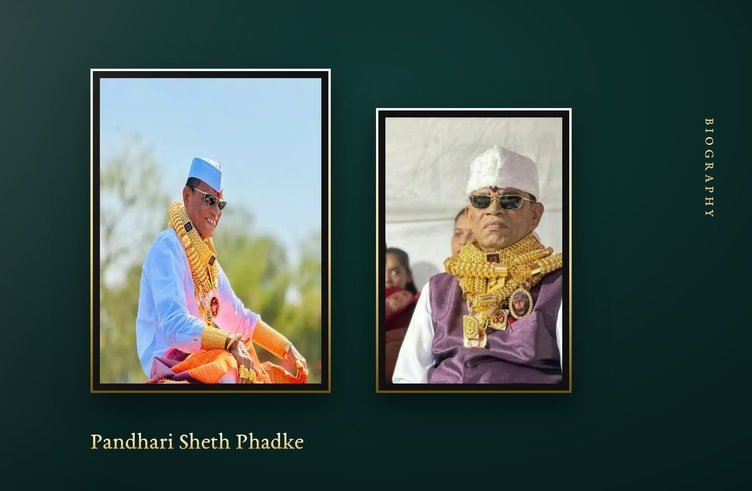
Pandhari Sheth Phadke was a Maharashtra businessman and bullock-cart racing enthusiast who became a prominent figure in the state’s racing community. Known as “Goldman” for his heavy gold jewellery, he served as president of the Maharashtra Bullock Cart Racing Association and backed the continuation of the traditional sport. His public profile was tied to Bailgada Sharyat, the Marathi name commonly used for bullock-cart racing, and to the people who organised and followed competitions across Maharashtra.
Quick Facts
| Known As | Pandhari Sheth Phadke; “Goldman” |
|---|---|
| Real Name | Pandharinath Phadke |
| Profession | Businessman and bullock-cart racing figure |
| Nationality | Indian |
| Known For | His role in Maharashtra’s bullock-cart racing community |
| Association Role | President of the Maharashtra Bullock Cart Racing Association |
| Died | February 2024 |
Pandhari Sheth Phadke’s Early Life and Background
Public details about Pandhari Sheth Phadke’s childhood and education are scarce. A July 2026 Founder’s Talk profile said his family had been involved in bullock-cart racing since the mid-1980s, after his father introduced the family to the sport around 1986. Phadke later became one of the best-known figures associated with that tradition. The family connection placed his later participation within a longer-running interest rather than a sudden association with the racing circuit.
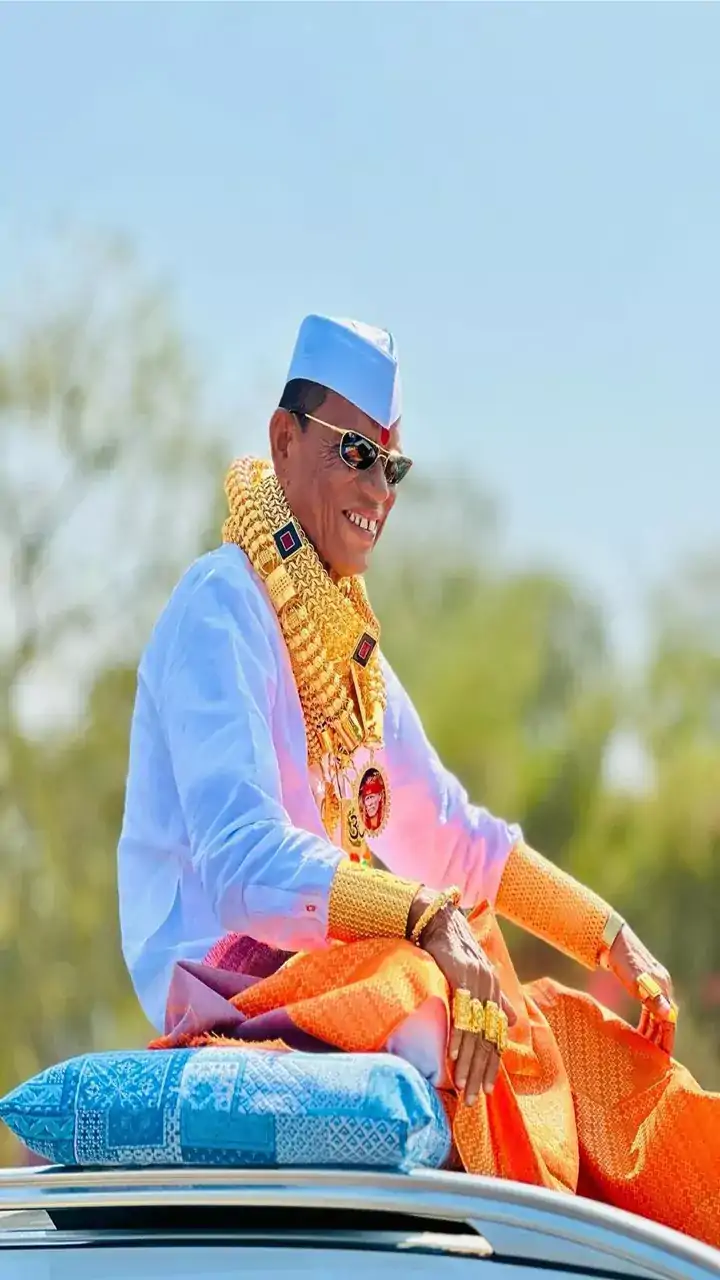
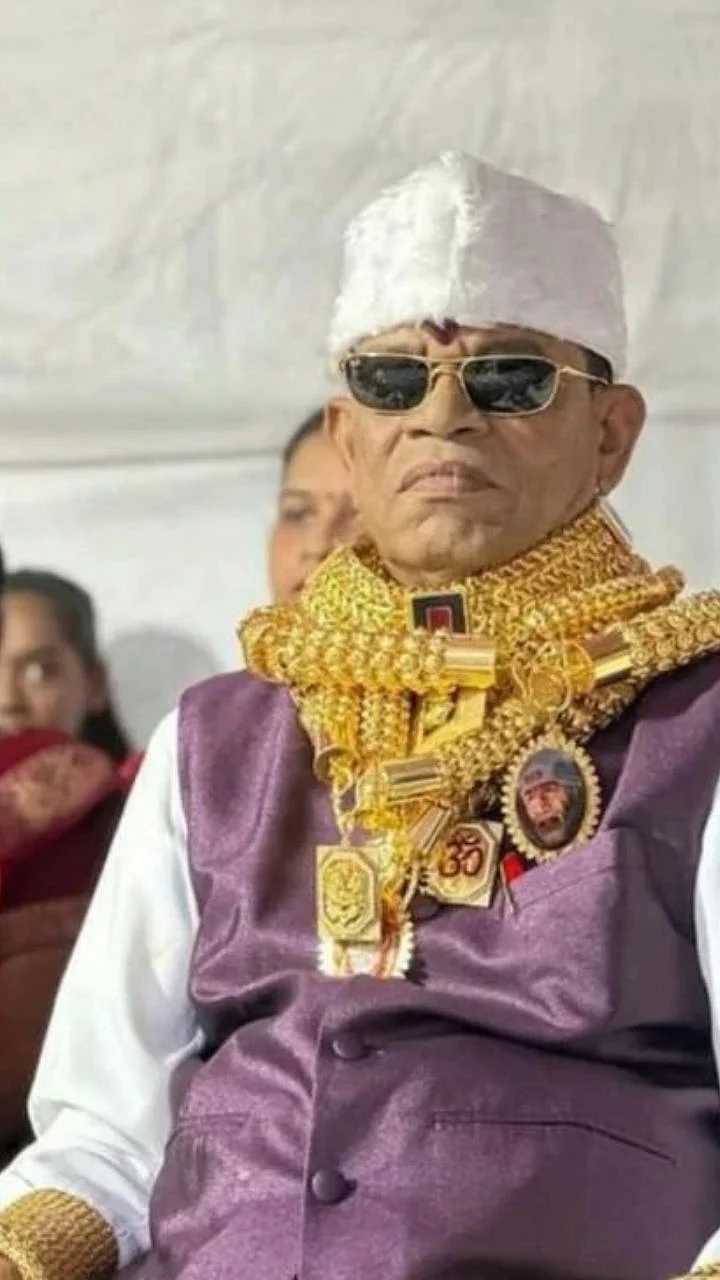
His personal life remained private. He was widely recognised in Maharashtra for his distinctive appearance, particularly the heavy gold chains, bracelets and rings he wore at racing events. The nickname “Goldman” grew from that public image. The jewellery was part of how spectators and people around the competitions recognised him; it also became the most familiar shorthand for his public persona. His image circulated in the same event setting where his association work and interest in racing were visible.
Bailgada Sharyat has a strong regional identity in Maharashtra, where bullock-cart competitions have been part of village and local sporting life. The Marathi name is used for the races and for the community around them, including participants, organisers and spectators. The events have also drawn attention beyond their local settings because they sit at the meeting point of rural traditions, animal-welfare rules and public regulation. Those competing concerns formed the wider setting for the sport during the years when Phadke was associated with its organised community.
Pandhari Sheth Phadke’s Career
Bullock-cart racing and association leadership
Pandhari Sheth Phadke was known for his involvement in Maharashtra’s bullock-cart racing circuit, also called Bailgada Sharyat. He supported racing events and became president of the Maharashtra Bullock Cart Racing Association. His work connected him with racers, event organisers and enthusiasts across the state. The association’s name reflects its focus on the sport in Maharashtra, while the president’s position placed him among the public representatives of the organised racing community.
The wider history of the races includes a substantial legal debate over whether and how they could be held. In 2014, the Supreme Court of India ruled against bullock-cart racing in the context of animal-welfare protections under the Prevention of Cruelty to Animals Act. That ruling formed part of a larger judgment concerning the use of bulls in events, including Jallikattu in Tamil Nadu. It brought the conduct of traditional competitions into a national legal discussion, rather than leaving regulation solely to local organisers or state authorities.
Maharashtra subsequently enacted an amendment intended to allow bullock-cart races subject to conditions. The legality of that measure was challenged, and the Bombay High Court struck down the state amendment in 2017. The dispute therefore continued through legislative and court processes, with the central question involving the balance between preserving regional practices and applying animal-protection law. The changing legal position affected the setting in which organisers and racing supporters considered the future of Bailgada Sharyat.
In 2023, a Constitution Bench of the Supreme Court upheld state amendments that permitted certain traditional events, including Maharashtra’s bullock-cart races, subject to the safeguards set out in the laws. The decision also addressed related state legislation concerning Jallikattu and Kambala. For bullock-cart racing, it returned attention to the terms under which competitions could take place and the responsibilities attached to those terms. This legal history provides context for the debates about the sport’s continuation, but it does not establish that Phadke personally took part in any particular court case or legislative process.
Races require arrangements for the animals, carts, participants and event grounds, and the debate over their conduct has often involved questions of animal treatment and oversight. The courts’ consideration of the sport brought those practical issues into focus alongside the argument about cultural continuity. In Maharashtra, organisers had to contend with the consequences of restrictions, challenges to state rules and later permission under regulated conditions. Pandhari Sheth Phadke’s association leadership placed him within a community negotiating that unsettled public environment, though his recorded role is principally described as support for racing and for its continuation.
A July 2026 Indian Fame biography described Phadke as a supporter of efforts to preserve the sport while encouraging responsible organisation. His association role made him a public representative of the racing community during debates about its future. The two aims—continuation and responsible organisation—were part of the broader discussion around the sport’s legal status. The issue was not simply whether a race could be held; it also concerned how organisers would meet the standards imposed by law and how the established racing community would adapt to them.
A Founder’s Talk profile published in July 2026 described a large stable of racing bulls maintained by Phadke, reportedly numbering between 40 and 50. It singled out a bull named Badal, which it said won competitions with prizes worth more than ₹11 lakh. The same profile said that caring for the animals involved substantial monthly spending on food, veterinary care and upkeep. These details describe the scale of the stable and the reported costs associated with it, alongside the competition success attributed to Badal.
The stable also places the animal-care side of racing within the account of his involvement. A group of racing bulls required ongoing attention beyond the days on which competitions were held. The profile’s description of food, veterinary care and upkeep points to recurring responsibilities, while its reference to Badal connects that care with the animals’ participation in events. The reported number of bulls and the named animal are among the few specific details about the racing operation associated with him.
In the wider Maharashtra circuit, local competitions bring together people whose roles differ: racers handle the carts, organisers arrange events, and spectators follow the contests. The association presidency gave Pandhari Sheth Phadke a position linking him to that network, while his support for events kept him connected to its public life. His recognition did not rest on an individual race result recorded here; it came from his place in the community and the profile he maintained at competitions.
Business activities
Phadke was also described as a businessman. A July 2026 Founder’s Talk profile associated his income with real estate, family business, agriculture and private ventures, but did not give audited financial figures. His public recognition, however, was chiefly tied to bullock-cart racing and his visible presence at events.
The distinction between his business identity and his racing profile matters in the way accounts of him describe his public life. Business was part of his occupation, while the association and racing circuit were the settings in which he became widely recognisable. It likewise gives no audited balance sheet or detailed record of commercial holdings. His nickname and public image, by contrast, were linked to his appearance at races and to his association with the sport.
Death
Pandhari Sheth Phadke died in February 2024. Lokmat Times reported his death on February 21, 2024, describing him as the “Gold Man” and the president of the Bailgada Association. His death prompted tributes from people connected to Maharashtra’s bullock-cart racing community. The report’s description brought together the nickname by which he was popularly recognised and the organisational role through which he was connected to the sport.
Those tributes came from a community that included people involved in the racing circuit. His association with the sport had spanned public-facing events and discussions about its future, while the legal framework for competitions had changed over time. The response to his death therefore belonged to the same regional network of racers and enthusiasts with which he had been identified during his life. The reporting in February 2024 recorded his death and his standing in that community.
pandhari sheth phadke net worth: What was his wealth?
No reliable public figure establishes Pandhari Sheth Phadke’s net worth. A July 2026 Founder’s Talk profile described him as wealthy and listed real estate, family business, agriculture and private ventures as reported sources of income, but gave no verified total. Any specific net-worth figure should therefore be treated as an estimate rather than an established amount. The absence of audited figures means that reported descriptions of wealth cannot be converted into a dependable total.
The profile’s list of income areas remains broad: it names categories of activity without providing property valuations, business accounts or other financial documentation. The reported size of his racing stable and the costs of its upkeep are separate details, not a statement of his overall assets. For that reason, a precise figure would go beyond what the public account establishes.
pandhari sheth phadke age: How old was he?
Phadke’s date of birth has not been publicly established in the biographical material available here, so his age at the time of his death cannot be calculated reliably. He died in February 2024. The account of his family’s connection to bullock-cart racing dates that involvement to around 1986, but it does not supply a birth year for him. A family history in the sport cannot, by itself, be used to determine his age.
pandhari sheth phadke wikipedia: Is there a biography?
A dedicated Wikipedia biography for Pandhari Sheth Pandhari Sheth Phadke is not identified here. The two subjects are distinct: the elections page is about a historical political event, whereas the biographical details here concern a Maharashtra businessman and bullock-cart racing figure. The existence of that unrelated page does not provide biographical information about him.
Personal Life
Phadke kept his family and private affairs out of public view. His public identity was closely associated with his business interests, gold jewellery and participation in Maharashtra’s bullock-cart racing community. His family’s involvement in racing is described as beginning with his father’s introduction of the family to the sport, but further details of family members and private life remain outside the public account.
His appearance at events was one of the clearest elements of that public identity. Heavy chains, bracelets and rings distinguished him in the racing setting, where the nickname “Goldman” became attached to him. Alongside that image, his role in the association and reported involvement with racing bulls formed the public picture of a person known within a particular regional community. The known details do not extend into a fuller account of his private relationships or day-to-day life.
Frequently Asked Questions
Who is pandhari sheth phadke?
Pandhari Sheth Pandhari Sheth Phadke was a businessman and prominent bullock-cart racing figure in Maharashtra. He was known as “Goldman” and served as president of the Maharashtra Bullock Cart Racing Association.
Why was Pandhari Sheth Phadke called “Goldman”?
He often wore heavy gold chains, bracelets and rings at public events. The jewellery earned him the nickname “Goldman.”
What was Pandhari Sheth Phadke known for?
He was known for his involvement in Maharashtra’s bullock-cart racing community and his association leadership.
Was Pandhari Sheth Phadke a businessman?
Yes. He was described as a businessman, though detailed records of his ventures and finances were not made public.
What was the name of Phadke’s famous bull?
A bull named Badal was associated with Phadke’s racing stable. A 2026 biography said Badal won competitions with prizes worth more than ₹11 lakh.
When did Pandhari Sheth Phadke die?
He died in February 2024. Lokmat Times reported his death on February 21 that year.
What was Pandhari Sheth Phadke’s net worth?
A verified net-worth figure is not available. Figures presented as exact totals should be considered estimates.
How old was Pandhari Sheth Phadke when he died?
His age cannot be reliably calculated because his date of birth has not been publicly established.
More Biographies Like Pandhari Sheth Phadke
- Ivor Mccray Biography: Age, Height, Relationship, Career, Movies & Net Worth
- Kirti Kulhari Husband: Biography, Education, Career, Movies & Awards
- Jiya Shankar Husband: Biography, Age, Family, Career & Movies
- Shanaya Katiyan Age: Biography, Family, Education, Career & Net Worth
- More Entrepreneur biographies
Thanks for joining us on this look at Pandhari Sheth Phadke’s life and career. See you in the next story!
